Your Work Went Viral. Someone Else's Version of It Did.
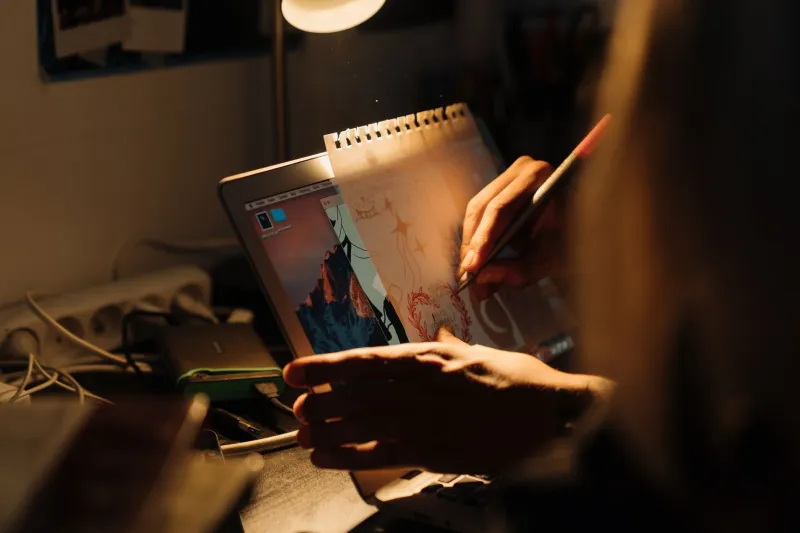
Imagine spending three weeks on a digital illustration. You obsess over the color grading, the composition, the tiny details nobody asked for but you put in anyway because that's who you are. You post it. It gets a respectable number of likes — solid, not spectacular. Then, two months later, you're scrolling and you see it again. Except it's not quite yours anymore. Someone added a trending audio track. Someone else cropped out your watermark and dropped it into a meme format. A third person used it as a background in a YouTube short with 800,000 views. The original? Still sitting at 3,200 likes.
This is the remix paradox — and it's quietly becoming one of the defining tensions in digital creative culture right now.
What Remix Culture Actually Means in 2024
Remix isn't new. Hip-hop built an entire genre on it. Punk zines thrived on cut-and-paste appropriation. Andy Warhol made a career out of recontextualizing commercial imagery. But the speed and scale at which digital work gets remixed today is something the culture hasn't fully reckoned with yet.
On TikTok, a visual can be dueted, stitched, greenscreened, and looped into oblivion within 48 hours of posting. On Instagram, a piece of digital art can be cropped into a quote card and reshared by accounts with millions of followers before the original creator even wakes up. The platforms are architecturally designed for this kind of mutation. Virality rewards the version that fits the moment, not necessarily the version that started it.
There's a difference, though, between the remix culture that creative communities have always celebrated and what's happening now. The old model had a kind of acknowledged lineage — you sampled something, you nodded to the source, you built a conversation. What digital artists are describing today feels more like a one-way extraction. Their work feeds an ecosystem that rarely loops back to credit them.
The Psychological Weight of Watching Your Work Mutate
Creators who've lived through this describe it as genuinely disorienting. Brooklyn-based illustrator and digital artist Maya Reyes — who asked us to use a pseudonym because she didn't want to amplify the specific accounts involved — says she first noticed it when a character she'd designed for a personal project started appearing in other people's content without context.
"The weird part wasn't even the lack of credit," she told us. "It was watching the meaning change. I made that character to process something specific about my own identity. And then it became this generic reaction image. People were using it to caption stuff about pizza or whatever. It felt like someone had taken something personal and just... flattened it."
That flattening is its own kind of loss. The original work carries context — the creator's intent, their cultural references, the specific moment in their life when they made it. A remix strips most of that away and replaces it with whatever meaning is most frictionless for the current audience. The art survives, but in a form the artist barely recognizes.
For some creators, there's also a rawer frustration: the remixed version performs better. Algorithmically, emotionally, commercially. The thing that took three weeks loses to the thing that took three minutes. That's not just an ego wound — it actively distorts the feedback loop that creators depend on to understand what their work means to people.
Inspiration, Appropriation, and the Space Between
Not everyone draws the same line. Some digital artists genuinely see remix as part of their work's life cycle — a sign that something they made resonated enough to enter a larger cultural conversation. That perspective isn't wrong. It's even generous. But it tends to come from creators who have enough of an established audience that their name travels with the work, or who have the resources to enforce attribution when they want to.
For emerging artists, the math is different. When your work gets remixed before you've built a recognizable brand, you lose the one thing that might have helped you build one: the direct connection between the piece and your name. Someone else's audience discovers your aesthetic without ever discovering you.
The legal framework here is genuinely murky. Fair use doctrine in the US protects a lot of transformative work, and for good reason — the ability to remix, comment on, and build from existing culture is fundamental to how creative communities evolve. But fair use was designed with a certain kind of intentional transformation in mind. It wasn't really built for the ambient, frictionless, algorithmic remix that defines how content moves through social platforms in 2024.
Platform terms of service add another layer of complexity. When you post work on most major platforms, you're granting them fairly broad licensing rights. That doesn't mean other users can do whatever they want with your work, but enforcing your rights requires time, energy, and often a legal budget that most independent creators don't have.
When the Ghost Becomes the Author
There's a phrase that keeps coming up in conversations with digital artists about this: ghostwriting for yourself. You create the raw material. Someone else adds the hook that makes it land with a mass audience. The credit — the cultural authorship — drifts toward the person who packaged it, not the person who made it.
This isn't hypothetical. Graphic designers have watched their work become the visual identity of meme accounts they've never heard of. Animators have seen their loops used in content that directly contradicts the values their original work expressed. Illustrators have found their characters licensed without permission by brands that would have paid them real money if anyone had bothered to ask.
The accumulation of these experiences changes how people make work. Some creators are deliberately building in more friction — posting lower-resolution versions, adding harder-to-remove signatures, avoiding certain platforms entirely. Others are leaning into the chaos, treating every remix as free distribution and trying to build enough brand recognition that audiences eventually trace the work back to them. Neither approach is a clean solution.
Reclaiming the Conversation
What's interesting is that some creators are starting to flip the dynamic. Instead of chasing attribution after the fact, they're building remix into the original release — posting process videos alongside finished work, sharing context that travels with the piece even when the piece gets separated from their profile. They're making the origin story part of the content itself.
Others are using the remix as a jumping-off point for public dialogue, quote-tweeting or stitching the remixed version with commentary that reestablishes their authorship while also acknowledging the transformation. It's a kind of cultural judo — using the momentum of the remix to redirect attention back to the source.
None of this fully solves the paradox. The remix will always be faster, lighter, and more algorithmically optimized than the original. That's kind of the point. But the conversation about what we owe original creators — not just legally, but culturally — is one that digital art communities are going to have to keep pushing, loudly, because the platforms aren't going to do it for them.
Your work going viral is supposed to be the win. It still is, kind of. It's just that the version of it that goes viral might not feel like yours anymore.
And that's a weird thing to celebrate.