Never Done: How Leaving Your Work Unfinished Became the Most Honest Thing a Creator Can Do

Photo by Photo by Valentin Blary on Unsplash on Unsplash
There's a Figma file floating around certain corners of design Twitter — now X, technically, though nobody really calls it that — where every frame is half-built. Buttons without labels. Color palettes that stop at three swatches. A hero section that just says "IMAGE HERE" in bold gray text. The person who posted it has over 40,000 followers. The caption read: this is the project. the file is the project.
That post didn't go viral because it was shocking. It went viral because a lot of people recognized something true in it.
The Finished Product Is a Lie (Or at Least a Performance)
For a long time, the creative internet ran on polish. Behance portfolios where every mockup looked like it had been photographed by a professional. Instagram feeds where the work was always pristine, always complete, always ready for a client deck. The implicit promise was that finished meant good, and good meant finished.
But something shifted — gradually, then all at once. Digital artists started posting process videos that didn't end in a reveal. Designers shared files mid-chaos. Illustrators uploaded sketches they explicitly said they'd never return to. And instead of the usual "can't wait to see the final version!" comments, people started saying: don't. this is perfect as it is.
What changed isn't hard to trace. The pandemic gave a lot of young creatives an involuntary crash course in the gap between effort and outcome. You could pour everything into something and still have it fall apart — a launch that flopped, a commission that ghosted, a project abandoned when the client budget evaporated. Completion started to feel less like an achievement and more like a gamble.
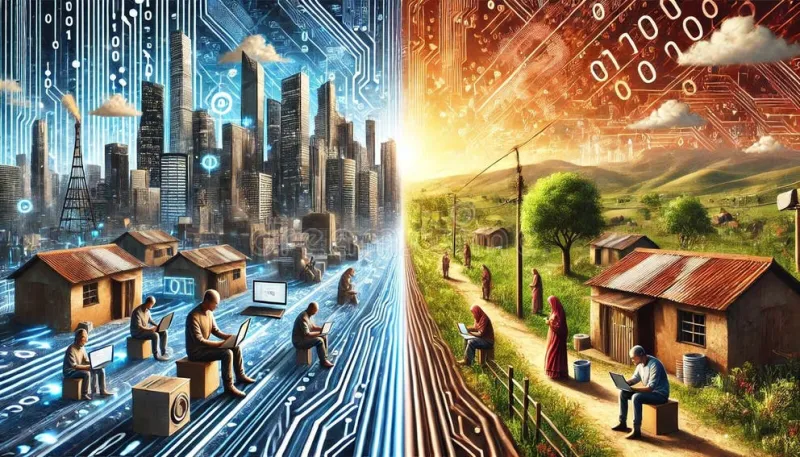
At the same time, algorithmic platforms kept raising the bar for what "finished" even meant. A polished post wasn't just competing with other polished posts — it was competing with sponsored content, with brand campaigns, with AI-generated imagery that could produce a technically flawless result in four seconds. Trying to out-polish the machine started to feel not just exhausting, but philosophically bankrupt.
Process as the Point
Kayla Osei, a 24-year-old motion designer based in Atlanta, has built most of her online following not around completed work, but around what she calls "living drafts." She posts motion graphics mid-loop, color studies that are explicitly unresolved, and occasional screen recordings of herself abandoning a direction entirely.
"People keep asking me when I'm going to finish things," she says, "and I'm like — what does finished mean? Finished for who? For a client? For an algorithm? I'm not making work for either of those right now."
Osei's framing hits on something a lot of young creators seem to be circling: the idea that the finished product is often made for someone else. For a brief. For a platform's engagement metrics. For the imaginary approval of a follower who might share it. Leaving something incomplete is, in a weird way, keeping it for yourself.
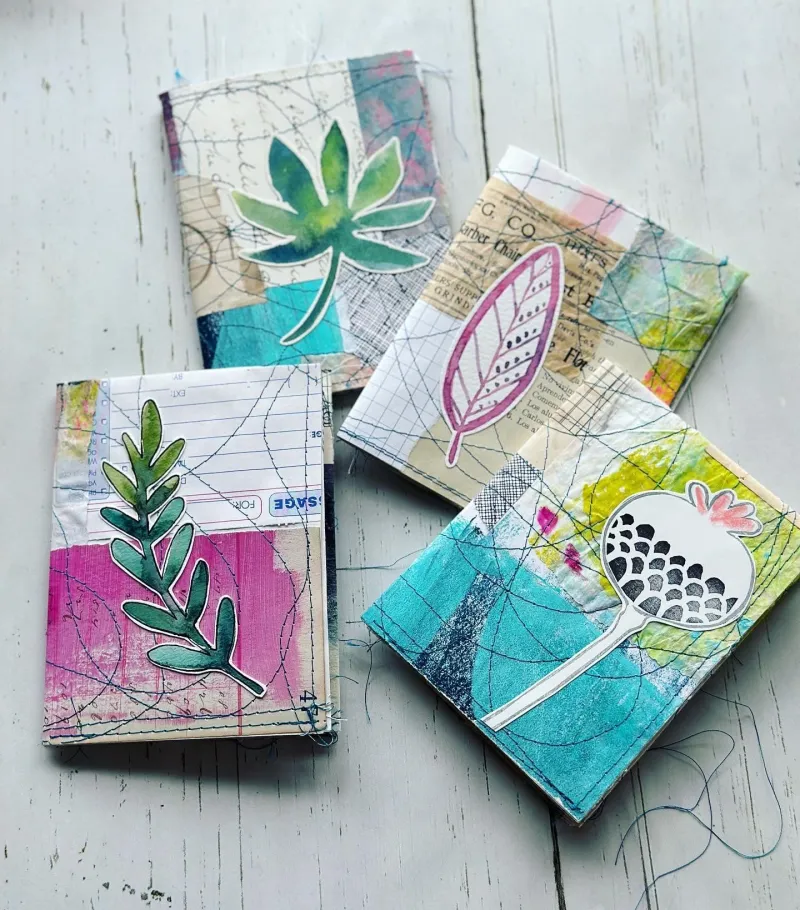
This isn't entirely new — artists have always valued the sketch, the study, the rough. Art history is full of unfinished masterpieces that people find more emotionally alive than the polished works surrounding them. But what's different now is the intentionality and the publicness of it. These aren't works-in-progress being shared accidentally. They're being shared as the work itself.
The Anti-Optimization Aesthetic
If you spend any time in spaces where young digital artists congregate — certain Discord servers, niche Tumblr revivals, the quieter corners of Instagram that the algorithm hasn't fully colonized yet — you'll notice a consistent visual language emerging. Rough brush strokes left visible. Typography that doesn't quite align. Compositions with deliberate dead space. Color choices that feel unresolved on purpose.
It looks, at first glance, like it could be inexperience. But spend five minutes looking at the rest of these creators' work and you realize it's anything but. These are people who know how to kern type. They're choosing not to.
Design educator and critic Marcus Tran, who writes about visual culture for several independent publications, calls this the "anti-optimization aesthetic" — a deliberate refusal to sand down every rough edge in pursuit of algorithmic legibility.
"Platforms reward work that reads fast," he explains. "Clean, high-contrast, emotionally legible in 0.3 seconds. And a lot of creators have started pushing back against that, even subconsciously. Messiness slows you down. It demands something from the viewer. That's not a bug — that's the feature."
When Incomplete Is a Political Choice
There's a more explicitly political reading of all this, too. In an attention economy where every piece of content is theoretically optimized toward some conversion — a follow, a sale, a click — releasing something deliberately incomplete is a small act of refusal. It doesn't fit neatly into a product funnel. It resists being repurposed into a brand asset. It's harder to steal, harder to replicate, harder to commodify.
For creators who've watched their finished work get scraped, remixed, and fed into AI training sets without credit or compensation, there's a certain logic to keeping things raw. An unfinished work is harder to flatten into a data point.
Jordan Myles, a 22-year-old digital collage artist from Chicago, puts it more bluntly: "If something looks done, someone's going to try to sell it. If it looks like a sketch, people leave it alone. I started making things look unfinished partly because I wanted to keep them."
The Followers Who Stay for the Mess
Here's the part that surprises a lot of people: the audiences for this kind of work aren't small. They're not niche in the way you'd expect. Creators who've leaned into the deliberately incomplete — the evolving, the fragmentary, the openly abandoned — often find that their engagement goes up, not down.
The theory, at least among the creators doing it, is that incompleteness creates a different kind of relationship with an audience. Finished work is something you look at. Unfinished work is something you're invited into. There's room for the viewer to project, to wonder, to feel like they caught something in the middle of becoming.
It's also, frankly, more sustainable. The grind of producing polished work at platform speed has burned out an entire generation of creators. Giving yourself permission to post the sketch, to share the abandoned direction, to say this is where I stopped and I'm not going back — that's not just an aesthetic choice. For a lot of people, it's a survival strategy.
The Work That Never Ends
Maybe the most radical thing about the unfinished aesthetic is what it implies about time. A finished work exists in the past — it was made, it's done, it belongs to history. An unfinished work stays in the present tense. It's always still becoming something.
In a cultural moment defined by acceleration, by the pressure to produce and publish and move on before the algorithm forgets you exist, choosing to stay in the middle of a thing — to refuse the ending — is its own kind of statement.
The Figma file with the unlabeled buttons is still up, by the way. The creator hasn't updated it in eight months. The caption now has a second line, added quietly sometime in the spring: still not done. still not starting over.
Somehow, that feels exactly right.