Pay to Belong: The Hidden Class Divide Reshaping Creative Communities Online
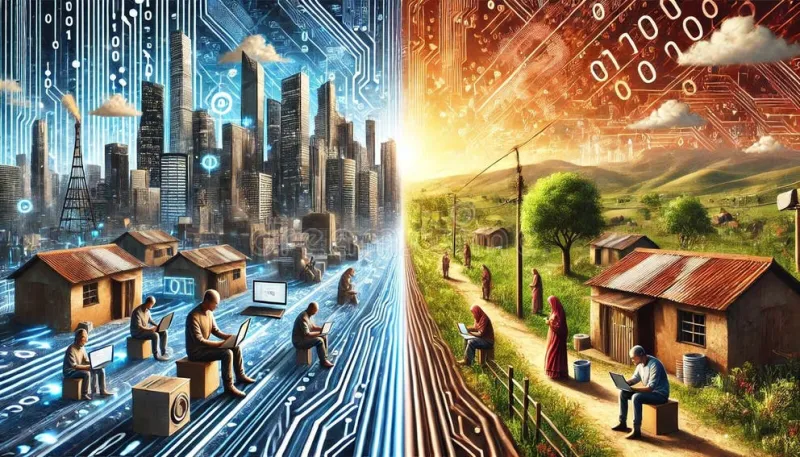
Photo: laptop screen Discord server creative community digital divide, via thumbs.dreamstime.com
Remember when the internet was going to fix everything? The pitch was simple and genuinely seductive: digital spaces would level the playing field. A kid in rural Ohio with a drawing tablet and a Wi-Fi connection could reach the same audience as a gallery-represented artist in New York. Geography wouldn't matter. Prestige wouldn't matter. The work would speak for itself.
That story still circulates. It's just gotten a lot harder to tell with a straight face.
The Architecture of Exclusion
Spend any real time in digital creative communities and you'll start to notice a pattern. There's the public layer — the Instagram grid, the open TikTok feed, the free Discord server where anyone can lurk. Then there's the layer underneath: the $15-a-month Patreon tier where the real tutorials live, the invite-only server where working artists actually share resources and opportunities, the private Slack where the people who matter in a given niche actually talk to each other.
This isn't accidental. It's infrastructure. And like most infrastructure, it was built with real logic behind it.
Creators — especially independent digital artists, illustrators, and designers — have had to get creative about income since the platform economy made it nearly impossible to sustain a living on ad revenue or algorithmic favor alone. Patreon, Substack, Discord's premium server features, and similar tools gave them a way to monetize directly. Offer something valuable behind a paywall, build a community around it, and maybe — maybe — you can actually pay your rent doing the thing you love.
That's a legitimate and genuinely hard-won economic reality. Nobody should have to apologize for it.
But here's where it gets complicated: when enough creators build enough walls, the cumulative effect is a landscape that looks a lot like the old art world, just with different aesthetics and better memes.
What Gets Left Behind the Paywall
Talk to emerging artists — people two or three years into their practice, still building an audience, still figuring out the industry — and a consistent frustration surfaces. It's not that they begrudge established creators their income. It's that the knowledge and community that used to exist in more accessible spaces has migrated somewhere they can't afford to follow.
Jada, a 24-year-old illustrator based in Atlanta who asked us not to use her last name, put it plainly: "When I was starting out, there were forums and open communities where people would just share stuff — pricing advice, client red flags, how to structure a contract. That stuff is still out there, but now the best version of it costs money every month. And if you're just starting, that money is real."
The irony is sharp. The creators running those paid communities often built their expertise because open communities existed when they were coming up. The information ladder is getting pulled up behind them — not out of malice, but out of economic necessity, which somehow makes it harder to argue with and easier to resent.
Collectors and buyers operate in their own tiered universe. High-value NFT drops, limited digital print releases, and early-access opportunities increasingly flow through private channels — Discord servers you only get into if you already know someone, or newsletter lists that require a purchase history to join. The secondary market for digital art has started to develop the same insider dynamics as the physical gallery world, where knowing the right gallerist matters as much as actually liking the work.
The Myth of Democratization
It's worth asking whether digital art's reputation as a democratizing force was ever fully accurate, or whether it was more of a founding mythology — a useful story that helped build enthusiasm in the early days.
The honest answer is probably: both. There was a genuine window, roughly from the mid-2000s through the early 2010s, when digital tools and open platforms created real opportunities for people who would have been locked out of traditional art world structures. Webcomics, DeviantArt, early YouTube — these weren't perfect, but they were genuinely porous. Talent had a fighting chance.
Platform maturation changed the math. As each platform grew, it became more valuable to the people already on it and harder to break into for newcomers. Algorithms started favoring accounts with existing followings. Monetization tools appeared, which was good, but they also created incentives to hoard rather than share. The open web gradually became a series of walled gardens, some of which charged admission.
Marcus, a digital art collector in Chicago who's been active in online communities since around 2017, describes watching the shift happen in real time. "The early NFT spaces felt genuinely open — weird and chaotic, but open. Then the money got serious and suddenly there were tiers everywhere. Who you knew started mattering more than what you were doing. It started feeling like every other art world I'd tried to get away from."
The Case For (and Against) the Walls
None of this is entirely one-sided. Private, paid communities do create real value. Smaller, higher-trust spaces tend to produce better conversations. When creators can earn a living, they make more work. Patreon has kept artists afloat who would otherwise have had to abandon their practice entirely.
And there's a reasonable argument that some fragmentation is healthy — that not every conversation needs to happen in public, and that intimate creative communities produce different (and sometimes better) work than broadcast-mode platforms do.
But "fragmentation" and "stratification" are different things, and it's worth being precise about which one we're actually dealing with. Fragmentation is just different communities forming around different interests. Stratification is when access to those communities is determined by who can pay, and when the knowledge and opportunity flowing through premium tiers pulls further away from what's available for free.
The digital creative world is doing both, simultaneously, and the second one deserves more scrutiny than it usually gets.
Where Do We Go From Here
There are creators actively pushing back on this dynamic. Some have built intentionally open communities — free Discord servers with real moderation and genuine knowledge-sharing, no premium tier required. Open-source design resource projects. Pay-what-you-can educational content. These exist, and they matter.
But they're swimming against a pretty strong current. The economic incentives all point toward tiering. Platforms are designed to facilitate it. And the broader culture of digital creative spaces has largely normalized it to the point where paying for community access feels as unremarkable as paying for a streaming service.
Maybe that's fine. Or maybe it means the next generation of artists is going to build something new, the way each generation does — finding the cracks in the current system, making something in the spaces the market hasn't figured out how to monetize yet.
That's usually how it goes. The walls go up, and then someone figures out a door.