Broke Is the New Brand: How Gen Z Turned Scarcity Into the Ultimate Flex
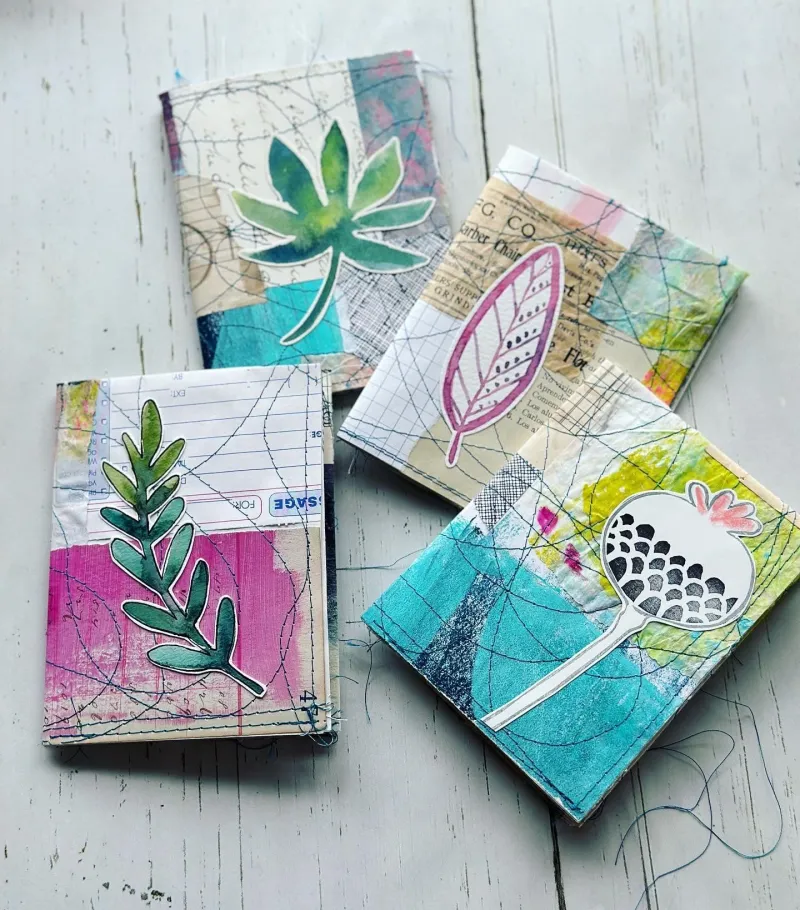
Photo: handmade zine DIY art project analog aesthetic creative workspace, via i.pinimg.com
There's a candle company you've probably seen floating around Instagram. No glossy product shots. No lifestyle model with a linen tablecloth. Just a slightly overexposed photo of a jar candle sitting on what looks like a secondhand dresser, a hand-typed label that looks like it came out of a 1997 label maker, and a price tag that would make your eyes water. It sells out in under an hour every single drop.
This is the world Gen Z built. And it makes absolutely no sense — until it makes all the sense in the world.
The Anti-Aesthetic That Became an Aesthetic
For a long time, the creative economy ran on polish. High production value meant high credibility. A clean logo, a cohesive color palette, a website that didn't look like it was built by someone's cousin — these were the entry tickets to being taken seriously as a brand or artist.
Then something shifted. Somewhere around the mid-2010s and accelerating hard into the 2020s, the most interesting digital creators started doing the opposite. Deliberately grainy photography. Fonts that look like ransom notes. Packaging that looks like it was assembled at a kitchen table at 2 a.m. — because it was.
This isn't sloppiness. It's a signal. And the people receiving that signal know exactly what it means.
Call it the scarcity aesthetic, the poverty aesthetic, or the DIY flex — whatever you call it, it's one of the most quietly sophisticated branding moves happening in the creative economy right now. It communicates something that no amount of Pantone-matched packaging ever could: I don't need your approval.
What the Look Is Actually Saying
To understand why this works, you have to understand what it's reacting against. Corporate aesthetics — the kind that dominate fast fashion, wellness brands, and tech startups — are engineered to feel safe, inclusive, and frictionless. They want you to feel nothing except the mild dopamine hit of a clean design. They're optimized to offend no one.
And to a generation raised on algorithmic content, that optimization is immediately legible. It reads as fake. It reads as trying too hard to seem like it's not trying.
The scarcity aesthetic does the opposite. A blurry photo taken on an iPhone 6 says: I'm not performing for you. A zine printed at Kinko's and stapled by hand says: This exists because I needed it to exist, not because a brand strategist greenlit it. There's an honesty baked into low production value that high-gloss imagery simply can't manufacture — and the audience knows it.
"There's a reason why the most coveted streetwear drops look like they were designed in somebody's basement," says one independent brand consultant who works primarily with Gen Z creators. "Because they were. And that origin story is the product."
The Paradox Nobody Wants to Talk About
Here's where it gets thorny: this aesthetic is, in many cases, an aesthetic choice — not a financial reality. And that distinction matters.
Many of the creators who've built cult followings on the back of DIY visual language are not, in fact, broke. They're designers who could easily afford professional photography. They're artists with Photoshop skills that would make your head spin. The "poverty aesthetic" is a costume, and sometimes it's being worn by people who grew up nowhere near poverty.
This raises real questions about authenticity — which is, ironically, the entire value proposition of the aesthetic in the first place. When a creator who went to a $60,000-a-year art school deliberately makes their work look like it was produced with zero resources, who does that serve? Is it a form of cultural appropriation of working-class visual culture? Or is it a legitimate artistic choice to reject corporate polish regardless of your background?
The answer is probably: it depends entirely on whether the creator has anything real to say, or whether they're just cosplaying scarcity for clout.
The audience — particularly online communities with finely tuned authenticity detectors — tends to figure out which is which pretty quickly.
When Restraint Becomes Revenue
What's undeniable is that the economic logic works. Limited runs, hand-numbered prints, deliberately imperfect production — these elements don't just signal authenticity. They manufacture scarcity in a market that's otherwise drowning in infinite digital reproduction.
Artists who've embraced this approach often report that the rough edges are the selling point. Buyers aren't purchasing despite the imperfections; they're purchasing for them. The visible evidence of human hands — a slightly crooked print, a smudged stamp, a hand-addressed envelope — becomes proof of life in a world increasingly suspicious that everything is AI-generated or factory-assembled.
Zine culture, cassette tape releases, risograph printing, hand-sewn patches: none of these are new. What's new is the deliberate elevation of these formats into status objects within digital creative communities, and the sophisticated online distribution networks that have turned cottage-industry aesthetics into genuinely scalable (if intentionally small-scale) businesses.
The Future of Looking Poor
The uncomfortable truth is that "looking poor" has always been a luxury available mostly to people who aren't. Vintage shopping was countercultural until it wasn't. Thrift-core became a TikTok trend. The aesthetic of scarcity gets absorbed, replicated, and eventually sold back at a premium — which is exactly what's happening here, in real time, on your feed.
But that doesn't make the underlying creative impulse invalid. The rejection of corporate visual language, the insistence on handmade and human, the distrust of polish as a proxy for quality — these are legitimate responses to a genuinely over-saturated, algorithm-flattened creative landscape.
The most interesting version of this story isn't the brand that faked it. It's the creator who actually made something real with nothing, found an audience, and refused to "level up" their production value even when they could afford to. That's not poverty. That's principle.
And in 2025, principle is the rarest luxury of all.