Let It Go: Why Some Digital Artists Are Done Fighting for Their Own Images
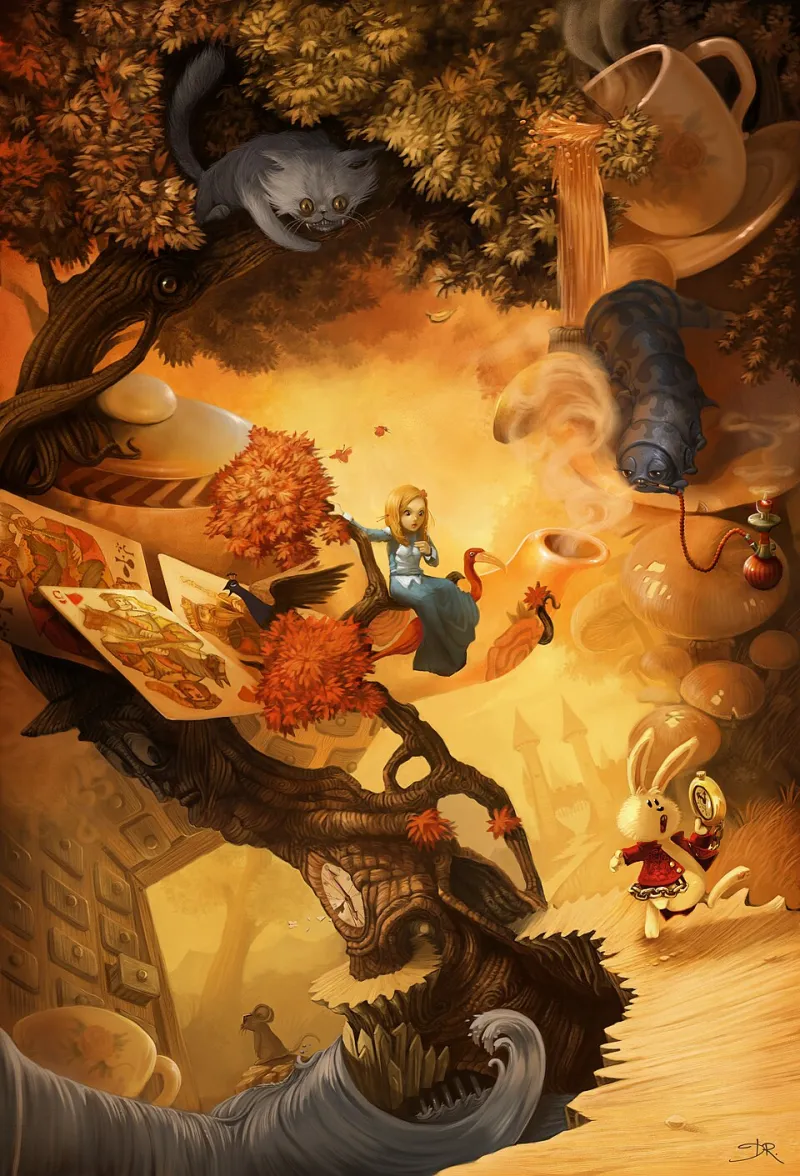
Photo: David Revoy, CC BY 4.0, via Wikimedia Commons
Kira makes digital illustrations. Intricate, layered, unmistakably hers — the kind of work that takes days and has a visual fingerprint you'd recognize anywhere. A few years ago, she spent a significant chunk of her time filing DMCA takedown requests, arguing in comment sections, and watching her work get reposted without credit across Pinterest, Tumblr, Reddit, and TikTok. She was exhausted. And she wasn't winning.
So she stopped.
"I just decided: the work is out there. It's going to go where it goes," she says. "Trying to stop it was like trying to hold water in my hands."
Kira isn't alone. Across digital art communities, a quiet but significant shift is underway — a move away from the white-knuckled grip of creator gatekeeping toward something messier, more philosophical, and in some ways more radical: the acceptance, even embrace, of creative circulation as a form of success.
The Control Myth
The internet was never designed to respect intellectual property. That's not a cynical take — it's just structural reality. Images are copied, compressed, stripped of metadata, reuploaded, screenshotted, and shared millions of times a day with no malicious intent and no mechanism to stop it. The tools that exist to protect digital work — watermarks, DMCA notices, platform reporting systems — are Band-Aids on a wound that was never going to close.
For a long time, the creative community's response to this was to fight harder. Better watermarks. More aggressive legal language in bios. Organized callout campaigns when big accounts reposted without credit. And sometimes it worked — at least enough to feel like it was worth the effort.
But the math has gotten worse. With AI image generators trained on scraped datasets, with reposts happening across dozens of platforms simultaneously, with the sheer volume of content moving through the internet at any given moment, the cost of enforcement has become completely disconnected from any realistic benefit.
"I was spending twenty hours a month on takedowns," says Marcus, a motion designer based in Atlanta. "Twenty hours. And new reposts would appear faster than I could remove the old ones. I had to ask myself what I was actually protecting."
When Spread Becomes the Point
The post-ownership mindset isn't just about giving up — though it's honest to acknowledge that exhaustion plays a role. For many artists, the shift involves a genuine reframe of what creative success looks like.
Traditionally, an artist's work spreading without attribution is a loss. Someone else benefits from the cultural energy you generated. Your name disappears. The work floats free of your identity and accrues value for platforms, aggregators, and whoever happened to screenshot it first.
But some creators are starting to see it differently. If your visual language is distinctive enough — if your style is recognizable even without a signature — then wide circulation is attribution, in a weird, decentralized way. The work carries your fingerprint whether or not your handle is attached. And the people who care enough to track down the source will track down the source.
"I've gotten commissions from people who found my work three or four reposts removed from the original," says Jade, an illustrator whose work regularly circulates on design meme accounts. "They didn't know who made it. They just knew they wanted more of it, and they went looking. That's the funnel."
This is not a universal experience, and it's worth being clear: it works better for some creators than others. Artists with highly distinctive styles, artists who've already built a recognizable body of work, artists whose aesthetic is hard to replicate — they benefit more from wide circulation than artists whose work is more generic or easily imitated.
The AI Problem Changes Everything
The unauthorized repost is one thing. AI training data is another.
When digital artists discovered that their work had been scraped into datasets used to train image generation models — without consent, without compensation, without credit — the reaction from most of the community was fury. Organized campaigns, opt-out registries, legal challenges, platform protests. The feeling of violation was real and legitimate: your creative labor, used to build a tool that could eventually replace you.
But even here, some artists are landing in unexpected places.
"I spent months being angry about it," says a digital painter who asked to remain anonymous. "And then I thought: my style is in there. When someone prompts an AI and gets something that looks vaguely like my work, that's my influence. That's weird and complicated and I'm not saying it's okay — but it's also kind of undeniable that my aesthetic is now part of the visual vocabulary of these models."
This is a genuinely uncomfortable position to articulate, because it risks sounding like capitulation to an industry that has caused real harm to working artists. But it points to something real about how influence travels in the digital age — in ways that are increasingly impossible to trace, track, or own.
What Attribution Even Means Now
Credit has always been the currency of creative communities. But what does credit look like when an image has been reposted forty times and the original post is buried under three years of algorithmic drift?
Some artists are experimenting with new approaches: building visual signatures into their work that are recognizable without being intrusive, creating distinctive enough bodies of work that the style itself is the brand, leaning into community and direct relationships rather than platform-mediated distribution.
Others are going further — releasing work under Creative Commons licenses, explicitly inviting remixing and reinterpretation, treating their output as a kind of open-source cultural contribution. The logic: if circulation is inevitable, you might as well make it intentional. Shape the terms of your work's spread rather than pretending you can stop it.
"Ownership is a legal concept," Marcus says. "Influence is a cultural one. I've stopped trying to own my work and started trying to influence the conversation. Those are different games."
Neither approach is wrong. Neither is easy. But in a creative landscape where the old rules of attribution and intellectual property are being stress-tested by technology and scale simultaneously, the artists who are figuring out how to work with circulation rather than against it might be the ones who survive the next decade with their sanity — and their careers — intact.
Letting go isn't giving up. Sometimes it's the only move left that actually makes sense.