Going Out in Style: The Creators Turning Their Own Endings Into Art
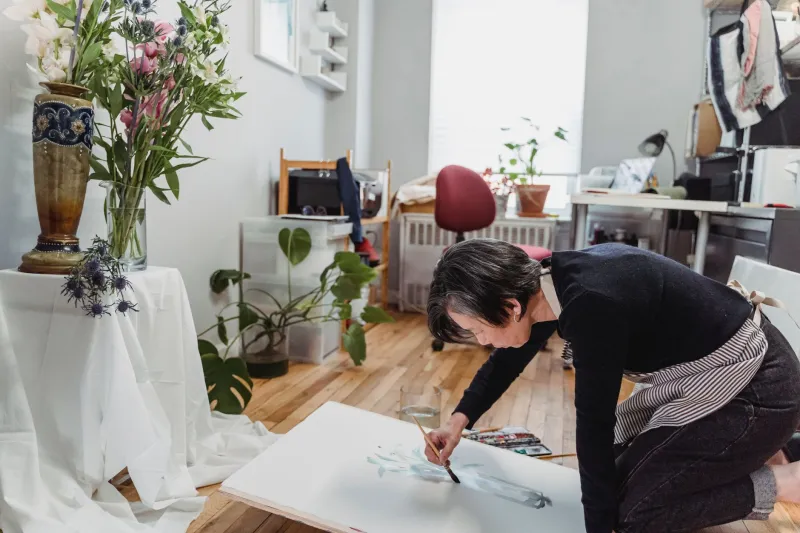
There's a specific kind of video that's been quietly multiplying across the internet lately. It opens with lo-fi music, maybe some slow-motion footage of a nearly empty sketchbook or a dashboard with a flatlined analytics graph. The creator speaks directly to camera, unhurried, almost ceremonial. They're not announcing a hiatus. They're not teasing a rebrand. They're burying something — a project, a persona, sometimes an entire creative chapter — and they've dressed the whole thing up like a wake.
Welcome to the creative funeral. It's weird, it's weirdly moving, and it's becoming one of the more honest things happening in digital art culture right now.
The Ritual of the Deliberate Goodbye
For a long time, the dominant script for a creator stepping back from something was either the dramatic flameout or the slow, embarrassed fade. You either rage-quit publicly or you just... stopped posting, hoping no one would notice. Both options handed the narrative to the audience — to the comments section, to the Reddit threads, to whoever felt like writing the eulogy on your behalf.
What's different now is the reclamation. Creators are deciding that if something they built is going to die, they want to be the ones who document it. They want to design the ending with the same intentionality they brought to the beginning. And in doing that, they're transforming personal creative loss into something that functions more like cultural commentary than content.
This isn't just journaling. It's not a sad TikTok. The creators doing this most deliberately are treating the goodbye itself as the work — complete with aesthetic choices, narrative arcs, and a clear point of view about what the ending means.
Obsolescence as a Creative Medium
There's something almost punk about it, honestly. The mainstream creator economy runs on the myth of perpetual growth — more followers, more reach, more engagement, always scaling, never stopping. To stand in the middle of that and say this is over and I'm going to make the ending look exactly how I want it to look is a small act of defiance that hits differently than most "authentic" content ever does.
Artist and designer communities online have been especially active in this space. Illustrators archiving entire project folders in public, walking viewers through work that never launched. Graphic designers posting teardown threads of brand identities they built for clients who ghosted or projects that collapsed before they shipped. Musicians releasing the demos that didn't make the cut alongside an honest accounting of why the album died.
What ties all of this together is the deliberate aestheticization of the loss. These aren't confessionals. They're not asking for sympathy. They're more like curated exhibitions where the subject matter happens to be failure, abandonment, or change — and where the documentation itself becomes the final artifact.
The Audience Reads It Differently
Here's the thing: people respond to this content in a way that's qualitatively different from how they respond to standard "I'm taking a break" videos. The comments tend to go deeper. Viewers aren't just offering condolences or encouragement — they're engaging with the work, treating the goodbye piece as something worth analyzing and sitting with.
That's because when a creator frames an ending as intentional, they give the audience permission to treat it as meaningful. It's the difference between a building being demolished and a building being decommissioned with a ceremony. One is just destruction. The other invites reflection on what the thing was, what it meant, and what its absence will feel like.
For digital art communities in particular, where so much work exists in formats that are inherently impermanent — platforms that shift, algorithms that bury, links that break — there's something genuinely significant about a creator choosing to mark the moment of disappearance instead of just letting it happen quietly.
Control in a Space That Rarely Offers It
The deeper function of the creative funeral might be psychological as much as artistic. The internet has a long history of deciding the fates of creators' work for them. A piece goes viral without credit. A project gets mocked into irrelevance. A community dissolves when a platform changes its terms. Creators rarely get to write the final chapter of anything they build online — it usually gets written by engagement metrics or platform policy or just the passage of time.
Staging your own ending is a way of grabbing that pen back.
It says: I know this is over, and I'm going to be the one who decides what the ending looks like, what it means, and how it gets remembered. That's not morbid. That's actually a pretty radical assertion of creative ownership in a space that constantly strips it away.
The Line Between Art and Performance
Not everyone is convinced. There's a reasonable critique that some of this content is just sadness cosplaying as intentionality — that dressing up a creative disappointment in aesthetic packaging doesn't transform it into something more meaningful, it just makes it easier to watch. And look, that's fair. The line between genuine artistic framing and performed depth is real and sometimes blurry.
But even granting that tension, the trend points toward something worth paying attention to. The creators who are doing this most thoughtfully aren't just making their endings look pretty. They're asking real questions through the form: What does it mean to build something online that's designed to disappear? What do we owe the communities we create around our work? What does it look like to close a chapter with integrity instead of just walking away?
Those are questions the digital art world doesn't ask nearly enough.
The Ending as the Point
Maybe the most interesting thing about the creative funeral as a form is what it implies about the rest of the creative process. If you're willing to treat the ending as something worth crafting carefully, it reframes how you think about everything that came before it. The work wasn't just content. The community wasn't just an audience. The project wasn't just a side hustle.
It was something real enough to deserve a real goodbye.
And in a cultural moment when so much of what gets made online is designed to be disposable — optimized for the scroll, forgotten by the next week — that insistence on treating endings as meaningful feels almost countercultural.
The creative funeral isn't about giving up. It's about refusing to let the algorithm be the last word on what your work was worth.