Making Art in a Ghost Town: The Creators Who Chose Dying Platforms on Purpose
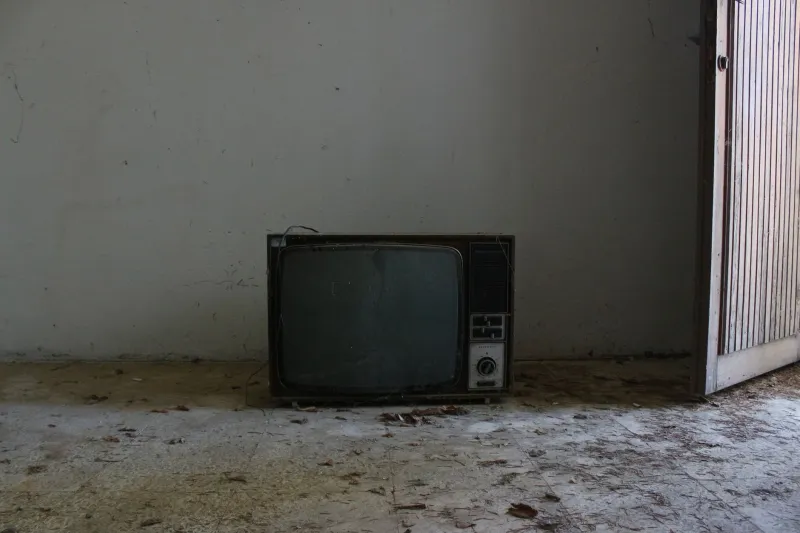
There's a specific kind of silence that lives inside a platform after everyone leaves. Not the silence of an empty gallery before opening night — more like the silence of a building that was never supposed to still be standing. Dust on the dashboard. Notifications that stopped coming years ago. A follower count frozen like a stopped clock.
Some creators are moving in.
Not out of nostalgia. Not because they missed the memo that everyone migrated to something shinier. They're here deliberately, building carefully considered work inside digital spaces that the broader internet has more or less declared dead — and the abandonment is the whole point.
The Platform as Material
When we talk about medium in traditional art, we mean paint, clay, light, sound. For a growing number of digital artists, the platform itself has become the medium. Not just the tool they use to distribute work, but the actual substance of the piece.
Think about what it means to publish something on Tumblr in 2024. The platform hemorrhaged users after its infamous 2018 content policy changes. The algorithm is a relic. Viral moments don't really happen there anymore. When you post something to Tumblr today, you're not throwing it into a current — you're placing it very carefully into still water.
That stillness changes what the work does. A piece posted to Tumblr isn't competing for attention in the same frantic way something on Instagram or TikTok is. It exists in a different temporal register. People who find it are either specifically looking, or they stumble across it the way you'd stumble across a note tucked inside a used book. The discovery feels intimate in a way that an algorithmically-served piece never quite can.
Artists who understand this are using it. The limited reach isn't a bug they're tolerating — it's a curatorial decision.
Neocities and the Return of the Hand-Built Web
If Tumblr is the abandoned shopping mall of this story, Neocities is more like the weird homemade museum someone built in their garage and left open to the public.
Neocities is a web hosting platform that explicitly invites people to recreate the hand-coded, visually chaotic energy of early-2000s personal websites. And the creators using it aren't just doing retro cosplay. Many are making genuine artistic statements about what the internet chose to leave behind when it optimized itself into a handful of sleek, monetizable platforms.
A hand-coded HTML page that takes three seconds to load, features a tiled background image, and organizes information in a way that no UX consultant would ever approve — that page is doing something that a clean, responsive portfolio site simply cannot. It's communicating a whole philosophy about who gets to design the internet, what design is actually for, and what we lost when we handed all of it over to platform companies.
The visual ugliness, to the extent that it exists, is a form of resistance. It says: I made this with my hands. No template. No brand guidelines. No engagement metrics. Just me, deciding what this looks like.
Abandoned Discord Servers and the Art of the Preserved Conversation
Discord servers are maybe the most underexplored canvas in this whole conversation. Most people think of Discord as purely functional — a place to coordinate, communicate, organize. But a server is also an archive. Every channel is a timeline. Every pinned message is a curatorial choice someone made at a specific moment.
Some creators have started treating abandoned servers — either ones they built and watched empty out, or ones they've been granted access to by their original owners — as site-specific installations. The existing conversation history becomes part of the piece. The dead members list, the channels that were created for purposes that no longer exist, the bot commands that no longer work — all of it becomes texture.
It's not unlike what artists do with abandoned physical spaces. The peeling paint isn't a problem to fix. It's information. It tells you something about time.
Permanence as Political Act
There's something worth sitting with here that goes beyond aesthetics. Choosing to build on a dying platform is also a statement about permanence and visibility that cuts against the entire attention economy.
The dominant logic of digital creative work right now is: make something, get it seen as fast and as widely as possible, move on to the next thing. The cycle is relentless. The platforms are designed around it. Even the language we use — content, posting, dropping — reflects how disposable the whole enterprise is supposed to feel.
Creating on a dead or dying platform rejects that logic entirely. If the work lives on Tumblr, it's not going viral. It's not going to be seen by millions of people this week. It might be seen by a few hundred people over the next several years, each of them finding it in their own weird, indirect way. That's not a failure state — for these artists, it's the entire value proposition.
The work gets to just exist. It doesn't have to perform. It doesn't have to convert. It doesn't have to be optimized for a platform's current priorities or updated when the algorithm changes. It just sits there, in its dead or dying house, being what it is.
There's a quiet radicalism in that. In a creative economy that treats attention as the only real currency, refusing to chase it is an act of defiance.
Who This Is Actually For
It's worth asking honestly: is this accessible as a creative practice, or is it a luxury for people who already have audiences elsewhere?
Fair question. A lot of the creators doing this work have built followings on more active platforms first — they can afford to make work that won't be widely seen because they've already established themselves somewhere that pays out in visibility. For someone just starting out, building exclusively on Neocities might feel less like liberation and more like shouting into a void.
But that tension is part of the conversation too. The fact that deliberately limiting your reach feels like a privilege says something real about how thoroughly the attention economy has colonized our sense of what creative success looks like. The goal of making something that lasts, that exists on your own terms, that doesn't need to be constantly refreshed to stay relevant — that used to just be called making art.
The Ghost Town Has Good Bones
The platforms that the internet abandoned didn't disappear. They're still there, still technically functional, still holding everything that was ever posted to them. That's its own kind of strange miracle.
The creators building inside them aren't mourning what those spaces used to be. They're recognizing what they've become — places where the noise stopped, where the metrics don't update, where something made today might be found five years from now by exactly the right person at exactly the right moment.
That's not a consolation prize. For a certain kind of artist, that's the whole dream.